Will the government’s coronavirus social protection package suffice?

Will the government’s coronavirus social protection package suffice?

Authors: Rohit Kumar & Vanya Gupta
Published: April 06, 2020
Context: 1.7 Lakh Crore Pradhan Mantri Garib Kalyan Yojana
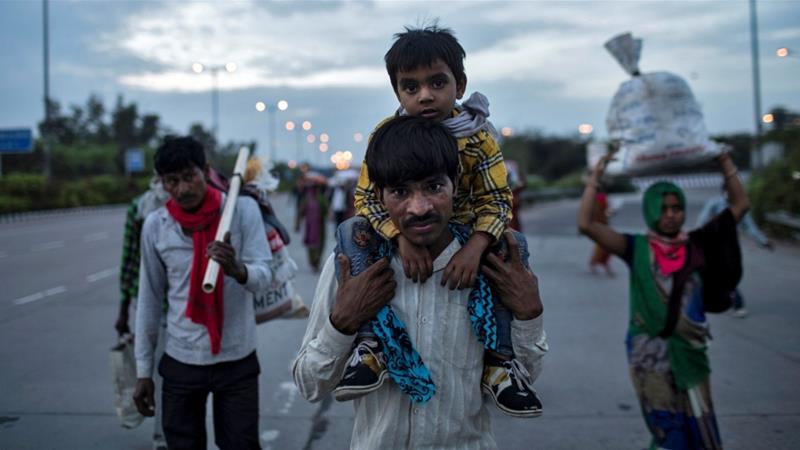
Image source: Aljazeera

The prevalence of a large informal economy makes India extremely vulnerable to the socio-economic impacts of COVID-19. Displacement, poverty and malnutrition are some of the issues that will almost certainly result from the lockdown that has been put in place to contain the spread of the disease. While the lockdown is a move in the right direction, it is going to affect almost every industry, and worryingly, the most vulnerable people in each industry. Gig economy workers and daily wage labourers face huge losses as their work comes to a standstill.

The government, recognizing the potential fallout of the lockdown, has been prompt in announcing a bunch of measures to address the problem. These include relaxed compliance requirements for companies, lower taxes, medical insurance for all frontline workers and a large social protection package for at-risk populations, such as farmers, self-help groups, construction workers, widows, differently abled, and senior citizens. This is certainly a good move. However, the package announced by the government may not be enough to contain the impact of the lockdown, and many households may find themselves pushed deep into poverty by the end of this crisis. While India’s package, by the FM’s reckoning, totals 1.7 lakh crore rupees, it is still only 0.8% of India’s GDP. Compare this with the US that has announced a stimulus package of over $2 trillion. Of this, $500 billion (or 2.3% of US GDP) is in the form of direct payments to people to overcome the loss of income likely to result from the crisis.

But numbers still don’t tell the entire story. Many sub-measures announced by the government are simply frontloading payments that were already committed, or redirecting funds that had been budgeted for other welfare activities. Most transfers also ride on existing schemes and use the existing database of beneficiaries. While this will help in speedy implementation, it is likely to replicate the inclusion-exclusion errors of the existing schemes and may pose a threat to vulnerable populations that are currently not covered.

For instance, additional food grains and pulses will be distributed for free through the PDS system. While it is good to leverage the existing system, these disbursals are likely to be impacted by the exclusion errors in PDS beneficiary lists. A study published in 2019 estimates exclusion errors to the tune of 10% across six states, with states like Jharkhand showing exclusion errors of 24% i.e. 24% of otherwise eligible households do not have a ration card to avail subsidized grain from the government. To go around this, states like Kerala and Delhi have come up with the suspension of Aadhaar cards and ration cards until the lockdown is lifted, so as to include as many people as possible under the social protection measure. More states may need to do this too, to truly ensure that the most vulnerable are not left stranded.

The increase in wages of MGNREGA workers, although a great step, will only kick-in after the lockdown is lifted, because all construction work has currently been suspended for the 21-day period. At this stage, the government can only clear the currently pending MGNREGA dues which can help families by giving them more cash in hand. It appears that every financial year, from the third quarter onwards, funds for MNREGA start to dry up. As of January 2020, 91% of wages, involving 2.03 crore transactions amounting to ₹2,802.59 crore, were pending for the month. The problem is likely to have exacerbated in March, thus putting daily wage labourers at greater risk during the pandemic.

The government also announced cash transfers to all women-held Jan-Dhan accounts to help women run their households, however, this too comes with challenges. When introduced, Jan-Dhan accounts came with a facility that allowed account holders the option of availing overdrafts (to be automatically adjusted against money that is deposited into the account). For many women, if they used the overdraft facility, the government’s cash transfer may never become available. And even if it does, the amount may not be adequate.

With regards to the free cooking gas cylinders being given out under the Ujjwala Scheme, there are a couple of issues to consider. The original scheme design requires people to pay for the cylinder at the time of collection, and the money gets reimbursed in their account at a later date. This has been a problem for many because low-income households often do not have the cash flow to avail the benefits of the scheme; as a result, the uptake of refills under Ujjwala has been very low. If implemented in the existing format, the scheme is likely to face the same problem, and poor households will be unable to benefit from it.

Lastly, the use of the Welfare Fund for Construction Workers by states may exclude a large proportion of construction workers who are at risk because of the lockdown. Workers aged between 18 and 60 years who have been engaged in building or construction work for at least 90 days in the preceding 12 months are eligible to register under the fund. A report by India Spend suggests that a large proportion of construction workers, especially seasonal migrants and ‘naka’ workers are not registered; moreover, several registrations are incorrect too. Currently the number of registered construction workers in India is 3.5 crore, however, according to an estimate by Invest India, there are over 5 crore construction workers in India. Some other sources suggest that the actual number of construction workers is even higher. This directly reflects on the issue of exclusion as many construction workers will be left out of the social protection package being offered by the government. Some Trade Unions have also pointed out that the Welfare Fund is actually workers’ money, built through cess collected from builders. If it is used for COVID-19 relief, the fund would be depleted and this would hamper the other welfare activities that the fund was designed for.

For a country as large as India, and in the context of a crisis such a COVID-19, the government’s fiscal response needs to be stronger. COVID-19 is going to strongly hit the economy and affect the livelihoods of millions of Indians. While the lockdown may save people from succumbing to the disease, in the absence of a strong social protection response from the government, we will risk losing an equal number of lives to poverty.


Exiting the COVID-19 crisis – Lessons from Germany and South Korea

Exiting the COVID-19 crisis – Lessons from Germany and South Korea

Author: Renjini Rajagopalan
Published: April 25, 2020

Most countries impacted by the COVID crisis have put in place containment measures of one kind or the other. These range from sealing state and national borders, to imposing curfews and lockdowns in varying degrees. However, given the unsustainability of lockdowns which impose large economic costs, countries have been exploring strategies by which they can slowly revive economic activity, but without compromising on public health measures to contain the COVID infection.

Many countries are still struggling with the first wave of virus infections and therefore seem far away from implementing an exit strategy. Major European countries like Spain, Italy and Netherlands – despite their public spending in healthcare – haven’t done well either. Germany, however, seems to be an exception to this rule. Germany has over 1,53,000+ cases, of which only a third are currently active.[1] The country has cured and discharged over 106,800+ people successfully, and has death rates that are a fifth of what Spain and Italy are going through, and nine times lesser than the US.[2] Germany’s lockdown exit strategy involves allowing hairdressers, shops of 800 sq. meters as well as bookshops, bike stores and car dealerships to function.[3] By focusing on smaller establishments, and the auto industry in Germany which employs many people, the government is trying to elevate hardships for those employed in these sectors. Germany has also planned to open its educational institutions to relieve the burden of home-schooling, and to prevent an escalation of social and gender inequality in the next generation.[4] However, kindergarten classrooms will not function because younger kids usually find it difficult to socially distance or wear masks properly.[5] Large cultural events, such as concerts and beer festivals, will continue to remain banned until the end of August.

A major benefit that Germany seems to have had is its successful healthcare system which makes the country reasonably certain that if social distancing and adequate caution is maintained, then a second wave of COVID cases can be stymied. Extensive contact tracing has also been implemented by public health offices, and the state has leveraged even students (who are trained for contact tracing), to help beef up state capacity.[6] In the testing arena, the government has a wealth of private laboratories that have been leveraged to improve testing capacity.[7] Health insurance covers testing, and the state has also passed the COVID-19 Hospital Relief Act which guarantees funding of hospitals to ensure their liquidity, and to ensure compensation and rehabilitation of those in the medical profession.[8]

Yet another example of a country that seems to be doing relatively well is South Korea. Though the country only had a tenth of the cases that Germany did (10,708),[9] it has managed to successfully curb the spread of the virus without enforcing a full lockdown.[10] South Korea has allowed the functioning of a number of economic activities, including the running of its transport systems and many commercial establishments, so long as social distancing measures are maintained. While the pandemic was underway, factories were permitted to function at some level,[11] and once numbers came down, national elections were held too.[12] Currently, it is also understood to be considering requests to allow potential travel exemptions for businesspeople given how the country is one of the largest exporters and investors in the world.[13] That being said, schools remain closed for the time being, as do religious places.[14]

Some things that have worked well for South Korea have been its contact tracing measures, wherein information of confirmed patients is published on each local governments’ official website, and citizens also get regular alerts via the government’s Corona 100m app if they are in the vicinity of a COVID patient.[15] The government has also been making heavy use of surveillance technology, notably CCTV and the tracking of bank cards and mobile phone usage data, to identify who to test in the first place.[16] The state has been relatively transparent about the collection of information and is said to be anonymizing it. Interviews with citizens reveal that while some privacy concerns exist about contact tracing, most people are willing to surrender some freedoms in return for public health and safety.[17]

Perhaps most important has been South Korea’s experience battling SARS in the past[18]. The state proactively directed its biotech businesses to create COVID rapid test kits, as early as January 2020[19] which helped with its own testing, and now even other countries through exports. The country’s cultural comfort with social distancing norms – with South Koreans generally wearing face masks when unwell or while traveling to prevent contamination by germs, and bowing to greet each other as opposed to more intimate expressions of affection like hugs or handshakes, have also helped enforcement of health protocols. The country has also announced that all medical costs associated with COVID-19 would be met by the government regardless of whether it is a citizen or a foreigner resident in South Korea.[20]

While India is not in the same league as Germany or South Korea when it comes to public health infrastructure, two key lessons still stand out – (i) the need to leverage the private sector and cover costs of testing and treatment, and (2) to utilize technology in contact tracking, but responsibly. As India, relaxes the lockdown, infections are likely to increase again. Unless the government’s capacity is buffeted through the use of resources in the private sector, the effort to control COVID is unlikely to pay off. While there has been some movement on this front, the collaboration between the private sector and the government is yet to properly take off. Secondly, the adoption of technology in contact tracing, while deployed through the use of the Arogya Setu app, and through drones as well as CCTVs in states like Maharashtra[21] and Kerala[22], has not been very transparent. There is fear that the data collected through these means could be repurposed to tighten the government surveillance net, particularly in the absence of a national privacy legislation.[23],[24] What is urgently needed, therefore, is for the government to be transparent about the architecture of the tech apps being deployed and institute strict frameworks, and check and balance mechanisms, to regulate the usage of the data being generated from these interventions.

Sources:
[1] https://coronavirus.jhu.edu/map.html;
[2] https://coronavirus.jhu.edu/map.html;
[3] https://www.euronews.com/2020/04/06/analysis-what-is-europe-s-coronavirus-exit-strategy
[4] https://innovationorigins.com/initial-outline-of-the-german-exit-strategy-face-masks-and-then-back-to-school/
[5] https://innovationorigins.com/initial-outline-of-the-german-exit-strategy-face-masks-and-then-back-to-school/
[6] https://www.covid19healthsystem.org/countries/germany/countrypage.aspx;
[7] https://www.bloomberg.com/news/articles/2020-04-02/private-labs-helped-germany-test-1-million-for-covid-19-virus;
[8] https://www.covid19healthsystem.org/searchandcompare.aspx
[9] https://coronavirus.jhu.edu/map.html;
[10] https://www.npr.org/sections/goatsandsoda/2020/03/26/821688981/how-south-korea-reigned-in-the-outbreak-without-shutting-everything-down;
[11] https://www.ft.com/content/04e9c5fe-52b1-4eb8-bf9c-793d71a0524d
[12] https://asia.nikkei.com/Spotlight/South-Korea-election/South-Korea-s-COVID-19-response-masks-economic-woes-at-election
[13] https://www.ft.com/content/04e9c5fe-52b1-4eb8-bf9c-793d71a0524d;
[14] https://www.aljazeera.com/programmes/upfront/2020/03/testing-times-south-korea-covid-19-strategy-working-200320051718670.html
[15] http://ncov.mohw.go.kr/en/faqBoardList.do?brdId=13&brdGubun=131&dataGubun=&ncvContSeq=&contSeq=&board_id=&gubun=;
[16] https://www.nature.com/articles/d41586-020-00740-y;
[17] https://www.nature.com/articles/d41586-020-00740-y;
[18] https://www.ft.com/content/e015e096-6532-11ea-a6cd-df28cc3c6a68
[19] https://www.theguardian.com/commentisfree/2020/mar/20/south-korea-rapid-intrusive-measures-covid-19
[20] https://www.brookings.edu/blog/techtank/2020/04/13/combating-covid-19-lessons-from-south-korea/
[21] https://indianexpress.com/article/cities/mumbai/india-lockdown-drones-5000-cctv-cameras-keep-eye-on-crowd-in-mumbai-6342941/
[22] https://economictimes.indiatimes.com/news/politics-and-nation/kerala-police-drone-video-shows-lockdown-flouters-running-away-like-tracer-bullets/articleshow/75046046.cms?from=mdr
[23] http://www.rfi.fr/en/international/20200421-india-surveillance-apps-during-covid-19-%E2%80%93-boon-or-bane
[24] https://economictimes.indiatimes.com/tech/software/aarogya-setus-not-all-that-healthy-for-a-persons-privacy/articleshow/75112687.cms

India’s e-commerce policy: Adding uncertainty to the cart

India’s e-commerce policy: Adding uncertainty to the cart

Author: Aparajita Bharti
Published: July 22, 2020 in the Financial Express

The emergence of a ‘leaked, unconfirmed’ National E-commerce Policy Draft earlier this month follows a string of dubious developments in this sector. To a keen observer of e-commerce regulations, it is not surprising that the draft emerged before the official announcement, given the government’s previous misadventures with the policy in 2018 and 2019. Both the previous drafts had to be rolled back due to serious pitfalls and strong criticism from domestic and foreign players, other ministries within the government, and small sellers alike.

One of the key criticisms of these drafts, among other things, was that they sought to expand the regulatory mandate to have a say in the areas that are already regulated by other entities. For instance, the 2018 draft covered corporate governance provisions such as control of Indian founders with minority shareholding over their companies, and the 2019 draft included provisions with regard to governance of personal data, even when the Personal Data Protection Bill was already under consideration.

Given the significant pushback on many fronts, the leaked 2020 draft steers clear of many problematic issues. However, the overall protectionist and interventionist tone evident in the 2018 and 2019 drafts has been retained. Without going into the specifics of how it might be implemented, the draft makes several references to the government’s intention of imposing forced information-sharing obligations on larger companies to develop the Indian innovation ecosystem and prevent the creation of monopolies.

Even though this draft clearly states that data governance is the domain of the Personal Data Protection Bill and the Non-Personal Data Committee, several clauses allude to the powers of the proposed e-commerce regulator to restrict cross-border data flows and impose additional regulations on the use of data for the development of the domestic industry. Considering that ‘e-commerce’ and ‘digital economy’ are used interchangeably in this draft, it seems the envisaged e-commerce regulator and the Data Protection Authority under the Personal Data Protection Bill are headed towards a regulatory clash.

Further, certain other clauses, especially the power to seek source code from e-commerce entities (which, given the way e-commerce has been defined in the draft, includes everything from B2C e-commerce entities to social media platforms and search engines as well as IoT devices), is bound to make investors in India very nervous. There is no reference to IPR laws/trade secret protection when talking about such disclosures, completely disregarding the industry’s incentive to innovate or the benefits to Indian consumers through such innovation.

The silver-lining in the current draft is the government’s focus on B2C exports for Indian sellers. Interestingly, foreign e-commerce platforms are referenced quite fondly for their efforts to get Indian MSMEs registered on their global platforms. However, the government seems to have ignored principles of reciprocity in trade, while hoping for foreign players to be engines of growth in B2C exports from India.

Such provisions of the draft, in fact, reflect the broader inconsistency in approach of the Indian government with respect to the e-commerce industry over the last few years. In 2014, the Prime Minister issued a clarion call for increasing foreign direct investment and made several trips abroad to canvass for the same, bringing in large amounts of investment in this sector. By 2016, the government had started coming under pressure from organisations such as the Confederation of All India Traders (CAIT) to check the market power of the e-commerce sector as a whole. India then became the first country to have different rules for ‘marketplace’ and ‘inventory-based’ models, and FDI was clearly restricted to marketplace models.

In 2018, fearing the WTO talks on e-commerce, the government then hastily constituted a think tank within the Ministry of Commerce to draft India’s e-commerce policy. Interestingly, the two biggest online marketplaces by market share—Amazon and Flipkart—were not invited to give their views when this policy was being drafted (Flipkart was included initially, but kicked out after its takeover by Walmart). Till then domestic start-ups under intense competition from foreign players had also banded together to form ‘India Tech’, which started pushing hard for the government’s protection to Indian companies. The 2018 draft, therefore, had bizarre clauses such as protection of rights of Indian promoters for e-commerce companies, outside of the provisions of the Companies Act as discussed earlier.

After the roll-back of this draft, a press note 2 (2018) was issued that aimed to placate trader associations till the time a second draft was prepared. The second draft (2019) of the e-commerce policy was released in the din of the general elections, with no time for a consultative process. For most industry watchers, it was more of a statement of intent to protect domestic players as well as the interests of small and medium businesses, messaging that was necessitated because of imminent elections.

The current version, i.e. the third draft, is admittedly a lot more balanced than the previous ill-conceived drafts. However, it achieves this balance by not going into too many details. This allows the draft to retain its pro-domestic industry stance, while kicking thorny issues down the road to the proposed e-commerce regulator. Interestingly, this draft does not get into the nitty-gritty of pricing and discounting—a key sore point for small traders. Instead, it seems to take a more information disclosure-based approach to check unfair trade practices.

Overall, unfortunately, in this atmosphere of ‘atmanirbharta’, this policy does little to build confidence among foreign investors in India. It seems that while India wants capital investment, it is unwilling to cede any space to the entities that are willing to invest, not even a stable regulatory environment without the fear of policy concessions being reversed. What is worrying is that a lot of FDI was brought into India citing favourable government support, but that is now being increasingly reversed under pressure from domestic lobbies—a development that has wide ramifications for the Indian economy, even beyond this sector.

The question that faces the Indian government is whether it believes that India is self-sufficient even in terms of capital investment (many economists would disagree)? Unfortunately, the latest e-commerce policy draft suggests that the government has still not been able to resolve the conflict in its thinking.

E-Pharmacy Rules: Clear regulatory direction needed

E-Pharmacy Rules: Clear regulatory direction needed

Authors: Abhinav Saikia & Aparajita Bharti
Published: December 13, 2019 in the Financial Express

The draft Rules contain some ambiguous clauses and restrictive norms that can hurt both offline and online pharmacies

E-pharmacies, in recent years, have been able to fulfil unmet medical needs of the large Indian population by enabling access to affordable medicines to people in remote areas. They are also ensuring efficacy, transparency and reliability in delivering these items. Despite their noticeable advantages, e-pharmacies in India operate in a grey area from a regulatory standpoint. They have been embroiled in litigation following concerns raised by traditional offline chemists and entities from the medical fraternity.

To remedy the situation, the government had resolved to introduce e-pharmacy Rules with urgency. The Rules have now been approved by two committees, the Drugs Consultative Committee (DCC) and the Drugs Technical Advisory Board (DTAB). However, the government has still not been able to reconcile the demands of online and offline pharmacies within these Rules, leading to delays in formalisation of the regulatory structure for e-pharmacies.

Stakeholder concerns
Although the Rules seek to mitigate regulatory confusion and bring about a measure of uniformity in registration and licensing of all pharmacies, both offline and online, various stakeholders have taken objection to its provisions. They have argued that the Rules do not provide sufficient clarity on FDI norms. This is partly due to the vague definition of e-pharmacies in the Rules that does not distinguish between the marketplace and inventory-based models. They feel that FDI provides unfair advantage to e-commerce entities who can then introduce discounts on medicines and offer them at cheaper prices. They also fear that predatory pricing can hurt local players.

Another objection that the All India Organisation of Chemists and Druggists (AIOCD), a lobby group comprising 8 lakh offline chemists, has put forward is that the Rules allow snapshots of prescriptions to be uploaded (while the original Drugs and Cosmetics Act requires the original prescription to be submitted). According to them, not only does this water down the prescription verification system, it can help facilitate fraud, such as by allowing consumers to forge or reuse prescriptions, resulting in misuse of prescription drugs.

Licensing and monitoring clauses are yet another area of concern. Though the Rules provide that the e-pharmacy business premises will be periodically monitored by central and state licensing authorities, this will be hard to implement given how e-pharmacies are websites that are anchored online. The resulting ambiguity has thrown up questions as to whether e-pharmacies will require separate licences to operate across multiple states, so as to allow state authorities—who traditionally regulate drug sale—to monitor them?

Brick-and-mortar stores are not alone in their concerns, and e-pharmacies themselves have voiced concerns such as ambiguity around clauses of state licensing and FDI norms. They also find the Rules compliance-heavy in many respects. For instance, the Rules dictate that e-pharmacies record large amounts of data for every transaction and do a drugs dispensation verification on submitted prescriptions, which makes compliance extremely onerous and will result in poor-quality customer experience.


Another pressing concern is the Rules’ prescription regarding security of customer data. In order to address the issue of data security, the Rules prohibit disclosure of information gathered through the online platform and do not make any exceptions for such data to be shared internally for improving the functionality of platforms.

The Rules insist that all e-pharmacy portals operating in India should be registered in India and the data generated by them be stored and processed locally. E-pharma organisations, such as Myra, have expressed concerns that such a requirement would hinder local companies from sharing critical information with drug manufacturers who may be based abroad. Certain Indian pharma companies are of the opinion that more clarification is required on how doctors will access records data hosted on these platforms.

The data localisation requirements in the draft Rules are also not in sync with other proposals concerning data storage and processing, such as the soon-to-be-tabled law on data privacy – the draft Personal Data Protection Bill, 2018 (PDP Bill) – or the proposed regulation for health data under the Digital Information Security in Healthcare Bill, 2018 (DISHA). The PDP Bill allows cross-border flow of health data on the prerequisite that the individual has explicitly consented to it or because the transfer is necessary for emergency services, and DISHA does not provide a mandate for localisation of data. Such differences in requirements can lead to regulatory confusion in handling health data.

The way forward
The draft Rules comprise of some ambiguous clauses and in some cases restrictive norms that can hurt both offline and online pharmacies. The government should ideally leave the subject of localisation of health data under the purview of the PDP Bill, and provide more clarity with respect to ambiguous norms, such as FDI and state licensing. In drafting these Rules, the government has largely adopted norms relating to offline chemists and has not acknowledged the distinctions between the offline and online models. E-pharmacies come with multiple advantages such as greater choice, less information asymmetry, wider reach, better tracking systems and more effective consumer redressal mechanisms. The e-pharmacy Rules are therefore an opportunity to correct the huge imbalance in availability of drugs across the country by riding on increasing internet penetration. Given the positive externalities associated with e-pharmacies, it is imperative that the government create an enabling regulatory environment for them to thrive.

India’s Traceability Question

India’s Traceability Question

Authors: Rohit Kumar & Renjini Rajagopalan
Published: November 12, 2019 on Firstpost

At the recently concluded India Mobile Congress 2019, Union Minister Ravi Shankar Prasad spoke about India generating the largest amount of data in the world. Our tryst with technology has led us to being one of the foremost internet using countries in the world. However, the same has not been without consequences.

As with all mediums, the internet too is open to abuse. Social media platforms, with their ever-growing number of patrons, are particularly susceptible. Over the last few years, India has had to battle the spread of doctored images and falsified news which has fueled mob violence across the country, often resulting in the death of innocent people in a number of instances.

The Indian government had sought to crack down on perpetrators by seeking co-operation from dominant social media platforms such as Facebook and Twitter, who in-turn introduced numerous measures including employing fact-checkers to battle fake news. However, with Law Enforcement Agencies (LEAs) struggling to pinpoint the origin of such messages and effect convictions, the government has sought increased accountability from social media platforms, including having them trace senders of the original messages.

This has been strongly protested by platforms who cite encryption technologies (including end-to-end encryption) backing their messaging services, customer privacy, and likely reputational damage, in the event of allowing interception. Therefore in late 2018, the government attempted to compel them into doing so via amendments to intermediary guidelines which govern digital platforms. This had significant ramifications for tech companies since it had the potential to impact their operations, including the tech and encryption algorithms they deploy. While other issues had put these amendments temporarily on hold, a recent Supreme Court order that asked the government to curb social media misuse, has once again thrust the issue of encryption and government interception into national discourse.

Global models for governing the interception of encrypted information

Countries across the globe resort to different ways to intercept encrypted information. Some seek to limit those who use encryption by way of a license, while others might resort to using court warrants. Some might even seek backdoor access i.e. asking for ways or methods to bypass encryption.

Countries such as Russia and China have put in place laws that govern or limit the use of encryption by private companies, thereby allowing the state to maintain supervisory access over all information collected and processed by the companies. Australia’s recently enacted Assistance and Access Act too falls within this bucket. It not only empowers LEA’s to seek (and enforce co-operation) from technology entities to access specific users’ encrypted messages and data, but where companies can’t offer such access due to end-to-end encryption, it authorises them to demand that they build tools to do so.

The sheer variety of such interception models speaks to the unresolved nature of the issue. Even countries such as the US and the UK, while trying to be mindful of privacy concerns, are seeking increased compliance from intermediaries/social media platforms in the interest of national security.

Providing a balanced perspective

Technological innovations guarantee that security solutions like encryption stay a step ahead of any legal framework seeking to regulate it. But having to constantly play catch-up deprives LEAs of a robust and effective mechanism to investigate online offences (particularly urgent ones). Thus, even as we hold privacy and security sacrosanct, it is important to acknowledge the challenges faced by the security apparatus when they are obstructed in the path of a legitimate investigation.

While providing the government with backdoor access poses the risk of government surveillance, there is a case for service providers and LEAs to work together to develop mechanisms and modify technology, as required, to allow for lawful interception requests to be serviced on a case-by-case basis, while building strong safeguards to prevent misuse of this power to intercept.

Currently, interception requests under Indian law can be made to service providers under either the Telegraph Act (Section 5(2) or Rule 419(a)), the IT Act (Section 69), or the CrPC (Section 91), all of which require service providers to comply or suffer punitive measures, including fines and imprisonment. These laws only allow for communication to be intercepted on a set of pre-identified grounds. The chain of command with respect to overseeing interception requests runs the length of the senior law enforcement cadre, before reaching the Home Secretaries.

As another check, the laws also call for the creation of a Review Committee (both at the central and state level) which is required to meet once every two months to analyse, post-facto, every interception order for legitimacy on a number of criteria, including the specific grounds under which the request was raised, the protocol followed for interception, as well as the outcome of the same.

Both the processes followed in an interception — before an interception request is approved and the post-facto review by the Committee — draw flak from civil liberty organisations who cite lack of adequate checks and balances in what is essentially an executive driven process.

To create more safeguards, judicial oversight is often proposed as a solution. However, when it comes to interception, it must be noted that in many instances what is required is an urgent decision to avert a potential threat like a terror attack. In such instances, judicial oversight not only adds another layer to the process, it’s likely to make little difference since the judiciary may be reluctant to object in the light of grave concerns. As for the process followed by the Review Committee, while there is merit in placing yet another judicial member if only to build public faith, it is unlikely to be practically effective unless at least half of the committee is judiciary-based.

In such a scenario, a more effective solution could be channelising all requests for interception through a single platform/interface that is suitably audited at regular intervals to build accountability and transparency in the process. This should be accompanied by the codification of practices and principles of the Review Committee.

Our stakeholder interactions reveal that in each meeting, the Review Committee is tasked with evaluating thousands of cases and often picks a sample of a few hundred cases for deep-dive. To ensure a robust selection of cases for review, the specifics of the entire process should be codified in law. Not only will this bring transparency regarding proceedings it might also prevent arbitrariness in vetting-procedures in the future.

Government interception rests upon an uneasy truce between the government/LEA, private companies and civil society activists, and given our overwhelming reliance on data, it is important to achieve a proper balance between privacy and national security. A robust and more transparent interception system might be the solution to this conundrum.

Why land and property make good plotlines for Bollywood

Why land and property make good plotlines for Bollywood

Author: Chinmay Rayarikar
Published: June 17, 2020 on the Property Rights Research Consortium

It is often said that cinema is a mirror to the society that it thrives in. The recently released film Gulabo Sitabo, directed by Shoojit Sircar with Amitabh Bachchan and Ayushmann Khurrana in the lead, is a brilliant comedic take on the state of our property records. The very first Bollywood film to premiere entirely online; the film’s trailer created much buzz around Amitabh Bachchan’s look and the on-screen presence of the bickering duo, an elderly landlord Mirza (Bachchan) and one of his young tenants, Baankey (Khurrana).

The film is centred around the life of 78-year-old Mirza and his wife Fatima. Fatima, who is 17 years older than Mirza, is the owner of the ancient haveli in Lucknow that they live in. Fatima has let several tenants live in the haveli’s vast expanse, for rents that are next to nothing. Despite this, Baankey and his family, which consists of his three younger sisters and mother, refuse to pay their rent, partly due to their poor financial condition, and partly because of the poor condition of their living quarters. Fatima is seemingly on her deathbed, and Mirza is impatiently waiting for her to pass away so that he can inherit the haveli and evict all his troublesome tenants. As his impatience grows, Mirza goes to a lawyer to see whether he can use legal provisions to evict the tenants from the haveli.

At the lawyer’s, Mirza discovers that the haveli has been handed down to Fatima by her father without any formal document confirming her inheritance. This leads to a wild chase all over Uttar Pradesh, as Mirza tries to track down all of Fatima’s living relatives and asking them to formally give up their claim to the haveli. On the other hand, Baankey talks to government officials from the archaeology department, who discover that the haveli is worthy of being designated a historical monument. Humour and confusion ensue, as both Mirza and Baankey try to outwit each other in different ways to retain control. Sharing more would lead to spoilers but the film has all sorts of characters usually associated with transfer of land and property in India, from corrupt politicians to real estate developers, disgruntled tenants to unscrupulous middlemen.

This film joins a league of handful (but brilliantly narrated) Bollywood films that have touched upon the issue of land ownership, tenancy, confusion between land authorities and landlessness: issues that Indian citizens are all too familiar with and have internalized to an extent that these movies are not always tragedies! These movies have managed to be laughing riots or found space for romance and relationships, even as they were set amidst land disputes, which are usually the most stressful times of Indian adult lives. In this blog, we peek into Bollywood’s narration of contemporary land and property rights related issues through three other films that have used these plotlines in the past!

Do Bigha Zamin: Bimal Roy’s Do Bigha Zamin (1953) is a classic, critically acclaimed film which follows the life of a humble villager, Shambu Mahato, played by Balraj Sahni, and his family as they try to fend off a local landlord from taking their land to build a mill. Shambhu owns two bighas of land (around two-thirds of an acre), which sit right in the middle of the land owned by the local zamindar, Harnam Singh, played by Murad. Singh wishes to acquire Shambu’s land, but on being refused by Shambu, decides to take him to court based on the money that Shambu had borrowed from Singh, which he had been unable to pay back. Shambhu is given three months to pay back his debt, or risk losing his land to Singh as collateral. In portraying this story, the film touches upon the ruthless cycle of debt that the rural poor in India face. For many Indian households, the most significant assets are held in the form of land and housing. The threat to these assets and the livelihoods of these households by powerful, vested interests continues to be a horrifying reality in rural India, which is why this film from the early 1950s, continues to resonate even today.

Khosla ka Ghosla: One of the most popular ‘modern’ films on this theme, Khosla Ka Ghosla (2006), upon its release, became an immediate hit with viewers and critics alike. This film follows the exploits of Kamal Khosla (Anupam Kher) and his family, who find their ‘dream’ plot of land, bought with Kamal’s hard-earned money, only to be encroached upon by the corrupt Kishan Khurana (Boman Irani), the leader of a local property-usurping criminal gang in Delhi. With the Khosla family getting tangled in a series of hilarious events as they deviously plan to remove the squatter i.e. Khurana, from their rightfully owned property, the film manages to weave a narrative on issues which hit a chord with most middle-class urban families. From showcasing a family’s struggle to buy and own property, to dealing with land mafia and legal disputes over property ownership, and finally taking the story to a happy ending with a good old solution of Indian jugaad, the film’s captured the lived experiences of most home buyers in urban India. Let’s hope things improve for the better as the Real Estate (Regulation and Development) Act, 2016 starts to take root. 

Love Per Square Foot: Released exclusively on the online streaming platform, Netflix, Love Per Square Foot (2018) is a film directed by Anand Tiwari, which humanizes the many challenges surrounding real estate in Mumbai. The film shares the story of two millennials, Sanjay (Vicky Kaushal) and Karina (Angira Dhar), both of whom belong to lower-middle class families in Mumbai and dream of owning their own apartment. Through scenes which show Sanjay’s mother banging on the bathroom door while he reads a newspaper on the pot, or the ones that show plaster peeling off the ceilings at Karina’s crumbling house, the film manages to beautifully capture the reality of the millions of youngsters in Mumbai, who live in crammed houses and travel in jam-packed local trains but dream of having their own space someday. The film follows a comical set of events as Sanjay and Karina decide to con the state government’s system by entering a marriage of convenience to buy a house under a subsidized housing scheme meant for married couples. Affordable housing is a huge challenge in India’s mega cities, this film unknowingly puts a spotlight on the bureaucratic hurdles that exist even in the schemes that are launched to address this problem. Not to mention an unintentional commentary on the lack of state capacity to administer these affordable housing schemes with numerous onerous conditions.

In a country where countless people own no land, or have insecure access to land and housing, it is inevitable that these issues get reflected in films. At the centre of these films, characters are portrayed as going to any lengths to keep their land or homes from being taken over or to accumulate new land or build a new home. Stories of property disputes from a landlord-tenant dispute to conflicts over rightful ownership, or even the humbling desperation of an individual to own a property in their name, are so commonplace, that nearly everyone relates to them. However next time you watch a movie with a similar storyline, do remember that behind all the glitz, glamour and light-hearted humour of these films, lies the all too familiar tragedy of a broken land governance system.

Regulatory cobwebs threaten to scupper India’s data economy

Regulatory cobwebs threaten to scupper India’s data economy

Author: Deepro Guha
Published: August 06, 2020 on Firstpost

Today, data is the real wealth and it is being said that whoever acquires and controls the data will have hegemony in the future. The global flow of data is creating big opportunities as well as challenges.” These words were spoken by the Prime Minister of India during his speech at the World Economic Conference, 2018, perhaps an indication of the regulatory proposals in the offing. 50 crore Indians, over and above the current 45 crore, are expected to come online for the first time by 2022. Internet traffic in India is expected to rise to 78 exabytes (an exabyte equals a million terabytes) by 2021.

This exponential rise in the quantum of data generated in India would potentially create conditions for a thriving data market that can further be leveraged for the creation of new business opportunities, new forms of employment, evidence-based governance solutions, social welfare interventions etc.

In this context, the regulatory control of data is right up the list of policy priorities of the government. Regulation of data can be viewed from various prisms and policy objectives — privacy, national security, competition, ownership and innovation. Some of these objectives run counter to each other and there are several trade-offs that the government needs to make.

Current laws and policies

Currently, the laws in place for regulation of data is bare bones, with Section 43 of the Information Technology Act providing for basic norms of reasonable security practices during handling of data and punishments for contravention of the same. To further the scope of data regulation, the Government of India has been working on the Personal Data Protection Bill (PDP Bill) for regulation of personal data, formed a committee to advise on regulation of non-personal data and also touched upon data regulation in sector specific policies/laws such as the draft E-Commerce Policy, draft Digital Information Security in Healthcare Act (DISHA), RBI regulations for financial data etc.

While data regulation becoming a policy priority in India is very much in line with government action around the world, the Indian government’s approach can be described as haphazard and even overzealous.

Proposed regulators

Of the above-mentioned policy proposals, three proposed regulators are especially headed towards a collision course as they regulate the entire data economy. The first is the proposed Data Protection Authority (DPA) under the PDP Bill, which would be instituted with the objective of protecting personal data. Its jurisdiction would cover regulation of rights of data principals (those people who data pertains to), sharing of data, consent, cross-border transfer of data, roles and responsibilities of data fiduciaries (entity which collects the data) and data processors, mechanisms like data audits, classification of data fiduciaries etc. Thus the DPA is envisaged as a regulator looking at privacy as well as national security concerns.

Second, the report of the Expert Committee on Non-Personal Data (NPD report) has suggested the setting up of a Non-Personal Data Authority (NPDA), with the objective of facilitating sharing of non-personal data between entities who hold a large amount of data and Indian start-ups and other entities to build new products. Its jurisdiction would cover adjudication of data sharing requests, anonymisation of data among other things. Thus, the NPDA is envisaged as a regulator looking at unlocking economic benefits and ensuring smooth functioning of a ‘data market’.

Third, the leaked draft National E-Commerce Policy 2020 mentions setting up an institution of an e-commerce regulator which would ensure “fair competition, consumer protection (to the extent not covered by Consumer Protection Act) and handling of e-commerce related data issues”. However, the way this policy defines ‘e-commerce’ is in a manner that is used interchangeably with ‘digital economy’ which makes its reach as vast as the reach of the above-mentioned regulators covering the entire ambit of data-driven entities.

Regulatory confusion

These three proposed regulators with powers to govern data across industries in addition to sectoral regulators risk forming a regulatory cobweb, stifling innovation in data led businesses and increasing their compliance costs. The significant overlap in their powers and jurisdiction is even more concerning when one delves deeper into each of these proposals and examines some key proposals.

The first major problem is the definition of ‘non-personal data’. Non-personal data according to the NPD report is currently defined as any data which is not personal. Both technical and legal experts are uncomfortable with this definition.

While many technical experts contend that any level of anonymisation isn’t a foolproof guarantee against reverse engineering of data, legal experts contend that as collection and processing of data is a complex process often with no clear dividing lines between types of data, such an expansive definition is bound to create jurisdictional confusion between DPA and NPDA.

Additionally, while anonymised data is considered to be non-personal and thus ideally regulated by the NPDA, the NPD report’s recommendation of adding explicit consent provisions for anonymisation under the PDP Bill as well as Clause 82 of the PDP Bill providing for penalties for re-identification of anonymised data, could bring anonymised data under the jurisdiction of DPA as well.

Another source of confusion may be the definition of ‘data businesses’ (in the NPD report), as this bears a striking resemblance to the definition of ‘significant data fiduciary’ (SDF) in the PDP Bill. Both these terms are based on quantum of data collection thresholds, but these standards may be different in each case as they are decided by different authorities.

Similarly, confusion may occur between the proposed e-commerce regulator and the DPA, both of which are envisaged to have powers to define rules for cross border sharing of data.

To add to this puzzle, powers of proposed non-regulatory bodies such as ‘data trustees’, as suggested by the NPD report, also seem to clash with powers of the regulators. A ‘data trustee’ is proposed to be responsible for protection and enforcement of data rights of a community. The NPD report mentions that data trustees may have powers to order mandatory sharing of data, which could encroach on the regulator’s power to adjudicate on such requests.

Thus, with all the above proposals, it is safe to say that we are headed into a regulatory quagmire which can be a huge impediment for data driven businesses. While, prima facie, some of these proposals do mention that the regulatory scope will be well defined to avoid confusion, clarity will continue to elude unless ambiguity over some of the key definitions is resolved.

In its attempt to extract the maximum value from the data economy, the government must resist the temptation to be overzealous in regulation. An overtly complex regulatory structure can impede innovation, eroding the benefits of the data ecosystem that the government sought to reap in the first place.

Menstrual Waste Disposal: Where does India stand and how do we address the challenge?

Menstrual Waste Disposal: Where does India stand and how do we address the challenge?

Published: March 2020

It has been estimated that around 1 billion used sanitary napkins are discarded per month in India. Various studies have suggested that a single disposable sanitary napkin contains plastic which takes up to 500 to 800 years to naturally decompose, making sanitary napkins a serious environmental hazard. In addition, these products contain blood and bodily fluids, which if not sanitized to destroy pathogens, can spread dangerous infections to those coming in contact with such waste. All these aspects make the proper disposal and treatment of menstrual waste an extremely vital aspect of the menstrual health management (MHM) value chain, one that India can no longer ignore. Acknowledging the need to address these issues, various central government bodies, state governments and municipal corporations have issued rules regarding the handling of menstrual waste over the past few years. However, their implementation remains patchy and most menstrual waste still finds itself accumulating in landfills.

More recently, there has been a thrust by governments towards installation of incinerators in places with high footfall such as schools, workplaces, malls etc. However, the emission and safety standards of these incinerators are yet to be issued. Certain municipalities have also experimented with incineration at centralised bio-medical facilities. Although environmentally friendly and cost-efficient in comparison with decentralised incineration, such centralised facilities require menstrual waste to be segregated at source, which remains a challenge.

Given this context, TQH undertook a detailed study for the NFSSM Alliance to understand how this problem might be addressed. We spoke with a wide array of stakeholders in the menstrual hygiene and waste disposal ecosystem, including municipal officials, sanitary workers, civil society organisations, incinerator manufacturers and incinerator users to bring together their experiences and insights. This is one of the first comprehensive studies on the state of menstrual waste disposal in India. The study looks at the menstrual waste value chain in detail and presents possible solutions to this ballooning problem. A crisp brief for policymakers is also available below.

For any queries on the subject, please feel free to write to [email protected]

Access the detailed report here
Read the brief for policymakers

Saving the economy from COVID-19

Saving the economy from COVID-19

Will India’s 20 lakh crore relief package deliver?

On May 12, 2020, Prime Minister Narendra Modi addressed the nation through a televised address whereby he outlined the plan for India’s continuing response to the Covid-19 pandemic. He urged self-reliance and promotion of Indian enterprises. He also announced a special economic package, and said that the recent announcements by the government as well as the measures by the RBI, combined with the May 12 financial package amount to Rs. 20 lakh crore — nearly 10% of India’s GDP. The details of this special economic package were announced by the Finance Minister, Nirmala Sitharaman, through daily press briefings. The document attached here analyses the measures announced by the Finance Minister.

A careful perusal of the measures indicates a far lower fiscal outgo than what would have been expected for a stimulus equaling Rs. 20 lakh crore. Many announcements are a reiteration of earlier expenditure measures, and some others focus on monetary policy interventions to increase money supply. Several measures aim at long-term impact, without having any direct implications for the short-term COVID-19 recovery process. Fitch solutions, a macro intelligence firm estimates the fiscal impact of the additional stimulus to be only about 1% of GDP as opposed to the suggested 10%. Many analysts have thus called out the government’s tepid response to the crisis, especially given the economic contraction that India is staring at, with GDP slump projected to be as high as 45% for the quarter and 5% for the entire financial year.

In many ways, India’s response seems to pale in comparison with those of other countries, even against ones that did not impose as widespread a lockdown as India did. Countries like the USA and UK have been focusing on saving jobs and keeping demand from collapsing. The US is giving a one-time $1,200 cheque to every adult earning up to $75,000, plus $500 for every child they have. This is estimated to benefit around 90% of the households in the country. Similarly, the UK Government has committed to paying 80% of salary for staff who are kept on by their employer, covering wages of up to £2,500 a month.

While a like to like comparison is of course not possible, and the lack of formalisation in the Indian economy certainly makes it difficult for the government to implement a stimulus package as effectively as it is done in the developed world, the idea of the above comparison is to highlight the wide difference in the quantum of support. In the note linked here, we enumerate the different measures announced by the Finance Minister and analyse the likely impact of each measure on India’s immediate economic recovery, while highlighting potential challenges in implementation.

Access the detailed analysis here